
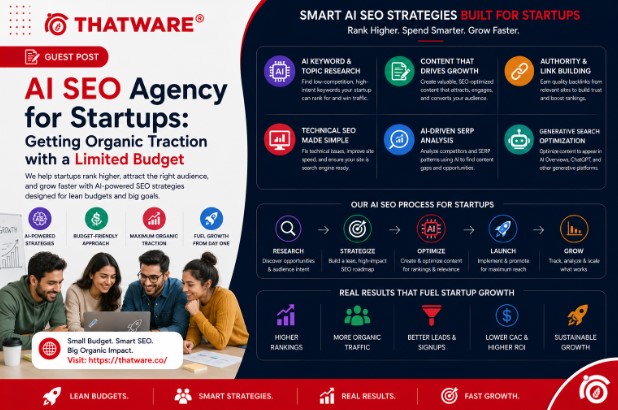
Startups and SEO have always had a complicated relationship. The channel takes time — that’s the unavoidable reality. But startups operate in compressed time frames with tight budgets, high pressure to show growth, and leadership that wants results yesterday. It creates genuine tension.
AI SEO adds a new layer to this tension. On one hand, the AI search landscape is still early enough that a well-positioned startup can actually compete with established players in ways that weren’t possible in traditional SEO. On the other hand, the field is complex, evolving fast, and not all the advice out there is well-suited to resource-constrained teams.
This is a guide to navigating that reality — specifically for startups that want to build meaningful organic and AI search visibility without burning through the runway in the process.
Why Startups Have a Hidden Advantage Right Now
Here’s something that doesn’t get said enough: startups actually have some structural advantages in AI-era SEO that established companies don’t.
Larger, older companies are often sitting on years of legacy content — inconsistent in quality, misaligned with how AI systems interpret authority, and difficult to update at scale. Their brand entity definitions might be messy across the web. Their content architecture might be a chaotic accumulation of decisions made by different teams over years.
Startups start clean. A startup can build its entire content presence with AI-era best practices from day one. Semantic structure, entity clarity, schema markup, topical authority — all of this is much easier to implement correctly on a blank canvas than to retrofit onto an existing mess.
That advantage only exists for a window of time, so it’s worth using it deliberately.
Budget Reality: What’s Actually Worth Spending On
With a limited budget, the question isn’t “how do we do everything?” — it’s “what actually moves the needle most efficiently?”
For startups specifically, a few things tend to give the best return on investment in AI SEO.
Entity establishment comes first. Making sure that AI systems — Google’s knowledge graph, ChatGPT’s training data, Perplexity’s retrieval systems — can clearly identify what your company is, what it does, and who it serves. This involves consistent structured data across your site, clear brand information, founder and team bios that establish expertise signals, and consistent brand mentions across credible sources. It’s not expensive to do right, and it pays dividends across everything else.
Topical authority in a narrow niche beats broad coverage with thin content. A startup with limited resources should pick the specific topic area where they can genuinely be authoritative and build comprehensive coverage there before expanding. AI systems reward depth in a specific domain over scattered coverage across many topics.
Technical SEO fundamentals matter more in AI-era search, not less. Schema markup, clean site structure, fast load times, proper internal linking — these are table stakes, and doing them right doesn’t require enormous investment if you build correctly from the start.
Choosing an Agency on a Startup Budget
Finding an affordable AI SEO agency that’s actually good — not just cheap — requires some care. Budget AI SEO often means either very junior practitioners or high volume of low-quality content. Neither serves a startup well.
A few things to look for that indicate quality without requiring enterprise pricing:
Focused specialization. An agency that specifically works with startups or early-stage companies tends to have better-adapted processes for the constraints you’re working with. They’re less likely to bring an enterprise playbook to a context where it doesn’t fit.
Transparency about time to results. Honest agencies tell startups clearly: certain types of SEO work take time, and there are realistic expectations to set. Agencies promising rapid organic growth without acknowledging this are either naive or dishonest.
Willingness to work in a phased approach. The best agencies for startups are comfortable starting focused — maybe with entity establishment and a targeted content cluster — and expanding scope as the engagement proves value. They’re not trying to sell the full engagement on day one.
A Realistic Approach to AI SEO Traction
What does a smart, budget-conscious AI SEO strategy actually look like for a startup? A rough framework:
Months one and two: establish the foundation. Technical audit and fixes, entity optimization, schema implementation, initial keyword and topic research specifically focused on AI search patterns for the target category.
Months three through five: build topical authority. A focused content cluster around the highest-priority topic area — not many pieces, but comprehensive, genuinely useful, and structured for AI system parsing. Aim to be the best resource that exists on that specific subject.
Month six onwards: expand and measure. Once the foundation is producing signals — appearing in AI Overviews, getting cited in LLM outputs, building organic traffic — expand scope based on what’s working.
This is simpler than enterprise SEO and faster to produce initial signals. Not overnight, but faster than many startups expect when they do it right.
When to Hire vs. Build In-House
For many early-stage startups, the real question isn’t which agency to hire but whether to hire an agency at all. Can you build this capability in-house instead?
Sometimes the answer is yes. If you have a technical co-founder with SEO knowledge and capacity to spare, building the foundation in-house with occasional expert consultation can be very efficient. If you’re pre-Series A and every dollar counts, a fractional SEO expert or consultant might serve you better than a full agency engagement.
The case for agency engagement gets stronger as you scale. When content production needs to accelerate, when you need expertise across multiple domains (technical, content, entity optimization), when measurement and reporting need to be systematic — that’s when the breadth of an agency becomes genuinely valuable.
The Long Game Is Worth Playing
One honest thing to say to startup founders: SEO — including AI SEO — rewards patience. The traction compounds over time in ways that paid channels don’t. A startup that builds solid AI search authority in year one is going to have a structural advantage in year three that’s difficult for competitors to replicate quickly.
If you hire AI SEO agency that understands startup constraints, works with your budget honestly, and builds the right foundation — the investment pays off. It just takes time to see it clearly.
ThatWare works with companies at various stages, including earlier-stage businesses that need smart, focused AI SEO work that fits their resource reality. Their approach is worth exploring at https://thatware.co/best-ai-seo-agency/ to understand whether it fits your situation.
The organic channel is one of the few that gets better with time, not more expensive. For startups playing a long game, that’s a compelling reason to start building it right, right now.